
Notes from the Sundance Bubble
Looking for Movies that Speak to the Moment

Sundance is a bubble. It’s a bubble of privilege and exclusivity. For those worried about Sundance's relevance, it is also still a bubble of enthusiasm, where audiences will go see almost any movie and just be excited to be in the room. (And there have been plenty of full houses this year). It’s also a political bubble, sheltered largely from the chaos of the outside world. But on the third day of this year’s Sundance, just as most of us were already fragile and reeling from the events in Minneapolis, another person, Alex Pretti, was shot 10 times and brutally murdered by ICE agents, making it increasingly difficult for some Park City audiences to stay inside the bubble.
I’m sure I wasn’t the only one focused as much on the videos of Pretti’s killing on my social media and news feeds as those big-screen movies that we were supposed to be watching. I, for one, found it difficult to seek out or be connected to movies that didn't somehow feel resonant or relevant to our current moment of crises. I’d bet that Olivia Wilde’s “The Invite” will be one of the biggest deals to come out of this year’s Sundance, but for all its twisted dysfunctional fun, smart performances, and terrific script, it hardly feels “of the moment.”
As Wilde put it in an interview in the Los Angeles Times, “I hope that allowing people to laugh last night felt good. But, you know, we’re very aware that Americans right now are out on the streets marching — and courageously so. It’s devastating.”
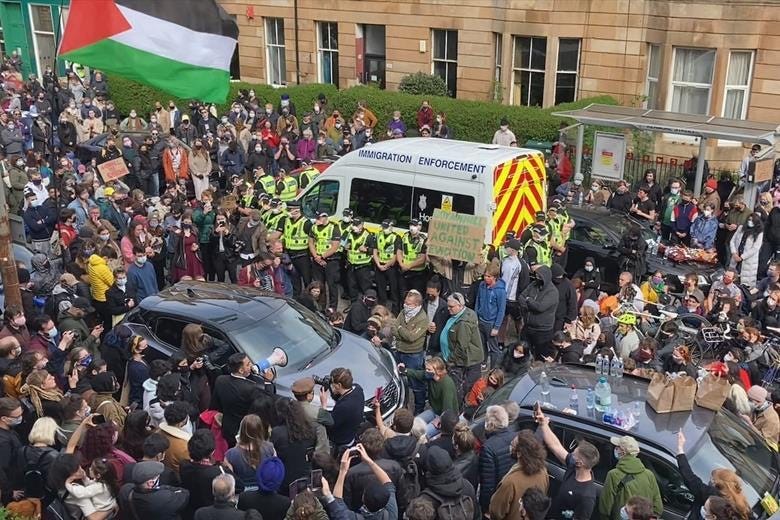
This is probably why my most memorable films so far out of Sundance 2026 are those that have something to say about the times (and feelings) we’re living in. There is, for instance, a rousing and clever Scottish documentary called “Everybody to Kenmure Street,” which chronicles an incident in 2021 when UK immigration officials, on the first day of the Islamic holiday of Eid, tried to remove two Muslim immigrants from a Glasgow neighborhood. But the community came out in full force in a spontaneous act of civil obedience that looks a lot like the kind of courage we’re seeing on American streets right now of people trying to protect their neighbors. But Glasgow 2021 is, of course, very different from Minneapolis 2026, so in “Everybody to Kenmure Street,” we get the kind of idealistic power-to-the-people vision that so many of us need to see right now.
I also can’t get Polish director Michał Marczak’s “Closure” out of my head. Surely, the most cinematic documentary at Sundance, and one that looks and sounds like a brooding piece of foreign art-house cinema, “Closure” follows a father’s obsessive, relentless, and Sisyphean journey to find his missing son. Part murder mystery, part captivating portrait of a desperate man who is trying to stave off the inevitable realization of grief, the film puts us in the protagonist’s pathological pursuit. There are no obvious political connections here, but there’s something in the unsettling state of “Closure” that feels all too current.
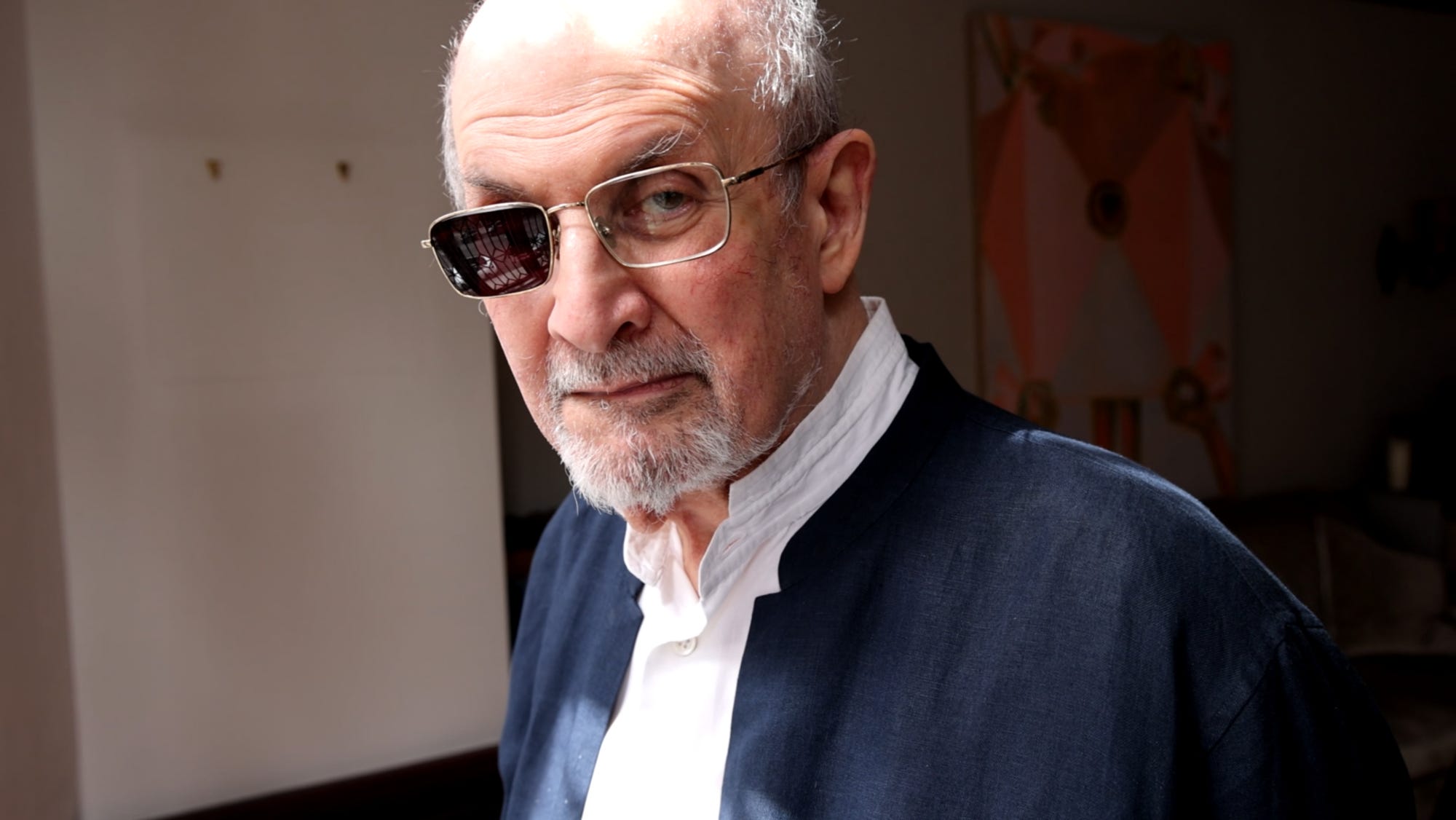
Alex Gibney’s compelling and stirring new film “Knife: The Attempted Murder of Salman Rushdie,” about the famous author of “The Satanic Verses" who was brutally attacked in a 2022 by a man with a knife, also feels like it couldn’t have come at a more fitting time in the way that it shows, as Gibney said at the screening, “How violence unleashed by an irresponsible political leader could be spread by ignorance.”
Gibney brings to life Rushdie’s memoir about the attack, mixing the author’s own words with candid video footage shot by his partner detailing Rushdie’s challenging recovery, evocative animation, and a skillfully collection of archival clips and movies that Rushdie references, including famous knife scenes from films such as “Knife in the Water,” “12 Angry Men,” and Bunuel’s “Un Chien Andalou,” and an ingenious sequence borrowed from Kurosawa’s “High and Low” that imagines Rushdie confronting his would-be killer.
The film itself also touches on the dangers of radicalism, the scourge of censorship, and the importance of freedom of speech. So yeah, it’s relevant.
“We have come to understand when you’re making a film, you’re making a film, and the world does what it does. And sometimes, the two things run into each other.“
Rushdie said as much as the screening, and expressed the kind of feelings that I was having at Sundance about finding movies that speak to the moment. “We have come to understand when you’re making a film, you’re making a film, and the world does what it does,” he said. “And sometimes, the two things run into each other.“
Rushdie went on to connect his own fears with those that we’re all feeling. “Maybe all of us are starting to feel the risk of violence, all of us are feeling that danger is just around the corner, and maybe this one experience can be a way for people watching the film to think about these larger things.”
“I really think it’s not just about me,” he continued. “I really believe that for the authoritarian culture, the enemy is culture understood in a very broad sense, whether that’s journalism or universities or music or writing… The uncultured and ignorant don’t like it, and they take steps against it.”
During the Q&A, Gibney offered another way of looking at the film’s relevanc. While it sounds a little saccharine, it’s also worth repeating. Gibney described the film’s story as “going from an act of hate to a place of love,” he said. “That is a terribly important thing for us at this moment, too, because while we’re faced with the growing momentum of authoritarian rule—we wake up every day to the horror and the news—it’s important that we continue to embrace our humanity and to love each other, even as we face this large political challenge.”
Thanks, Anthony. Excellent column. Such a disappointment that too much of what's being produced in this country is disengaged from the urgencies of our time. Earlier in many of our lives, American films were a step ahead and a force in driving the zeitgeist. Look forward to your reflections on the next films on your Sundance calendar!
Well said Anthony!